In a strategic partnership with CUAMM (Doctors with Africa), HISP Ethiopia is implementing the IMPULSE project, an initiative focused on improving the quality and use of newborn and stillbirth indicators. Central to this project is the IMPULSE LQAS (Lot Quality Assurance Sampling) App, a specialized DHIS2-integrated module designed to institutionalize data quality assurance.

The system empowers health facility managers and subnational data offices to measure and visualize data accuracy and internal consistency. By focusing on critical neonatal and maternal health indicators, the app identifies data discrepancies in real-time, allowing for immediate corrective action. This project plays a vital role in ensuring that public health decisions are based on high-fidelity data, ultimately contributing to the reduction of neonatal mortality and the improvement of maternal care outcomes across Ethiopia.

Supported by Resolve to Save Lives (RTSL), HISP Ethiopia is collaborating with the Ethiopian Public Health Institute (EPHI) to establish seamless technical interoperability between the Master Facility Registry (MFR) and the Public Health Emergency Management (PHEM) DHIS2 instance.

The primary goal is to eliminate data silos by creating an automated synchronization bridge between these two critical systems. By implementing standardized metadata assignments and secure communication protocols, the project ensures that health facility information remains consistent, accurate, and unified across Ethiopia’s emergency surveillance landscape.

To support long-term sustainability, HISP Ethiopia is adapting a specialized connector application tailored to the PHEM use-case. This tool empowers system administrators to monitor, configure, and manage the data exchange process in real-time, ensuring a reliable “single source of truth” for health facility management during public health emergencies.

Through collaborative effort with NIPH and EPHI, HISP Ethiopia is working on the ENABLE Project, which is a strategic initiative focused on deploying a DHIS2 Tracker-based eRegistry to modernize maternal and child health tracking in Ethiopia. The project is currently being piloted in selected health facilities across four major urban centers: Addis Ababa, Adama, Harar, and Jimma.

The initiative specifically focuses on the digitalization of Antenatal Care (ANC), ensuring that data for each visit is captured longitudinally. By tracking the continuum of care—from initial ANC visits through to delivery and birth—the eRegistry eliminates fragmented records and provides health workers with a comprehensive digital history for every mother. This shift from aggregate tallies to individual-level “Tracker” data enables more precise follow-up, improves data accuracy for urban health facilities, and supports the Ministry of Health’s goal of institutionalizing digital registries for better maternal and neonatal outcomes.

In partnership with the Family Guidance Association of Ethiopia (FGAE) and MoH, HISP Ethiopia is working on a comprehensive initiative to digitalize and harmonize Sexual and Reproductive Health (SRH) data systems. This project extends beyond the technical deployment of digital tools, adopting a holistic approach to ensure that Reproductive Health (RH), Family Planning (FP), and Adolescent and Youth Health (AYH) content is fully integrated into a unified digital framework.

The project focuses on aligning digital health solutions with national policies and international Sexual and Reproductive Health and Rights (SRHR) standards. By ensuring technical coherence and seamless integration into existing Ministry of Health (MoH) workflows, the initiative empowers MoH to track individual-level service delivery while maintaining high standards of data privacy and clinical accuracy. This transformation supports more informed decision-making, improves the quality of care for populations, and ensures that youth-friendly health services are supported by a robust, data-driven information system.

WHO in collaboration with the HISP Center at the University of Oslo, HISP Ethiopia and HISP Tanzania has initiated a pilot project to implement a DHIS2 based tracker tool to track the nutritional needs of under 5 children, pregnant women, and lactating mothers. This project, supported by AICS, is implemented in two Woredas in Ethiopia (Filtu and Dolo Ado) and a district in Somalia (Dolow). The project intends to register the interaction of the targeted segment of the population with health workers to ensure continuum of care both when they are seeking the service in their localities or whenever they are moving to another country crossing the border.

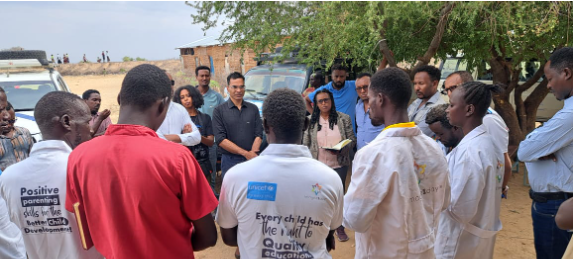
The project is a collaborative task of HISP Ethiopia with Unicef, MoH Ethiopia and HISP Center. The project aims to develop and implement scorecard and BNA apps in selected 9 intervention sites including  MoH head offices and other selected woredas of some regions of the country. The scope of the project covers incorporating Ethiopian calendar support and other software development on Scorecard and BNA apps. After the development of the apps piloting will be done  in two woredas of two regions.

Global Fund and other stakeholders such as MoH Ethiopia, HISP Center, HISP Ethiopia and SEAF Hub are a joint workforce to implement a DHIS2 customization platform for specific priority areas of MoH. The project includes supporting MoH on DHIS2 based platforms for TB, HIV, and Malaria. Additionally, this project involves supporting the server setups, metadata cleanups and upgrading DHIS2 version.

HISP Ethiopia is engaged with Amref for Health Africa’s and JSI on IPHCSD project. This project intends to develop a tracker program, involved in capacity building programs by organizing and providing training. Additionally, server configuration and support throughout the implementation of the project are main tasks to be undertaken.

Last Mile Health works with HISP Ethiopia to ensure tracker app development and create aggregate tools for project activities and capacitate the staff with training. The main focus areas of the project are nutrition and GMP. Furthermore, the project will involve server configuration and supporting the program as a whole.

Save the Children Somalia Country Office planned to enhance data collection, analysis, and visualization capabilities through the digitization of program information using the HISP Platform. As part of this effort, HISP Ethiopia has played an important role in the PMI software development process, including gathering the requirements, metadata management, data visualization, documentation, and training. HISP Ethiopia with a well-equipped platform has also provided technical support with software expertise during and after implementation of PMI software.